
By Priscilla Santos – Nature Canada; Origin article published in English
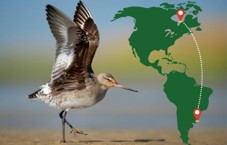
Hudsonian Godwit, one of the species that connects Moose Factory, a community on coastal James Bay, Canada, and communities that live by Lagoa do Peixe, Brazil.
Over the past 20 years, Nature Canada has worked with Indigenous communities in James Bay helping them identify and protect important areas for wildlife, especially birds. James Bay is one the most important shorebird stopover sites in North America.
In our interactions with community members, especially Elders, we noticed that a shared concern involved shorebirds. We heard from many people about how there are fewer of them now than in the past. They also asked “Where do they go when they leave at the end of the summer?”. To help answer these questions, Nature Canada sought new partnerships with organizations across the Americas to introduce and adapt the Discover Shorebirds curriculum to James Bay community schools and, in doing so, expand our work to local kids and youth.
In June of 2024, Nature Canada was approved for two years of funding from the Neotropical Migratory Bird Fund of the US Fish and Wildlife Service, which was matched by several partner organizations including the Canadian Wildlife Service, the Cree Nation Government, Moose Cree First Nation, Birds Canada, Manomet Conservation Sciences/Western Hemisphere Shorebird Reserve Network (WHSRN) and SAVE Brasil.
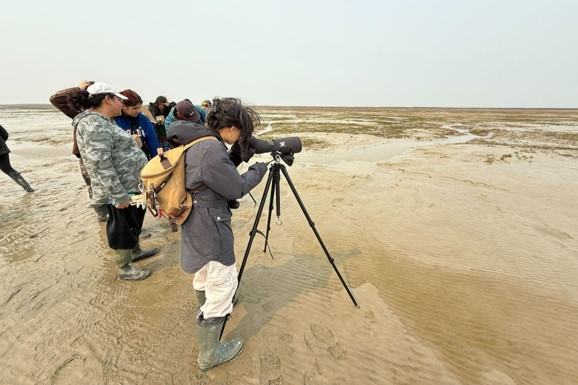
Spring 2025 school field trip with students from the Delores D Echum Composite School, Moose Factory, ON, Canada. Photo by Priscilla Santos
Activities to date are varied, from virtual and in-person teacher training sessions to community visits in Spring and Fall, during peak shorebird migration, to help guide field trips where students learn how to use binoculars and spotting scopes to find and identify shorebirds.
One of our key objectives is connecting communities who share the same migratory shorebird species, which we have successfully done with the support of our Brazilian partner SAVE Brasil. Since 2019, SAVE has been doing similar work in and around Lagoa do Peixe National Park, one of the most important shorebird stopover sites in South America.
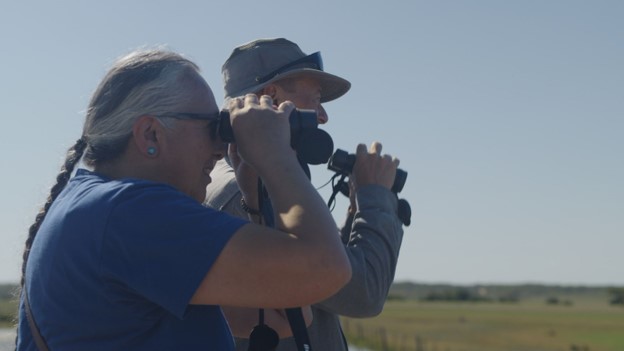
While most of our joint work has happened online, including facilitating virtual interactions between Canadian and Brazilian teachers and students, last November we were able to bring two Cree Elders from Moose Factory, a community on coastal James Bay, to the 16th Brazilian Migratory Bird Festival that took place in Mostardas – a town located nearby Lagoa do Peixe. This knowledge and cultural exchange included visits to fishing communities, schools, and interactions with students. We also did a lot of birding, which Elders John and Linda Turner enjoyed very much – and even spotted Hudsonian Godwits.
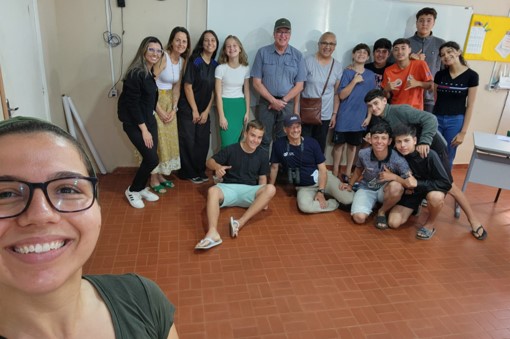
Elders John and Linda Turner with students from the Marcelo Gama school during their November 2025 visit to Lagoa do Peixe, RS, Brazil. Photo by Priscilla Sanots
In Elder Linda’s words “It turns out, the world is big, but the birds make it feel a lot smaller and more connected.”
For field notes from James Bay to Brazil: Flying with Shorebirds
For a summary of Elders John and Linda Turner adventures in Lagoa do Peixe: Migrating with Shorebirds, Where the Stars are Upside Down