
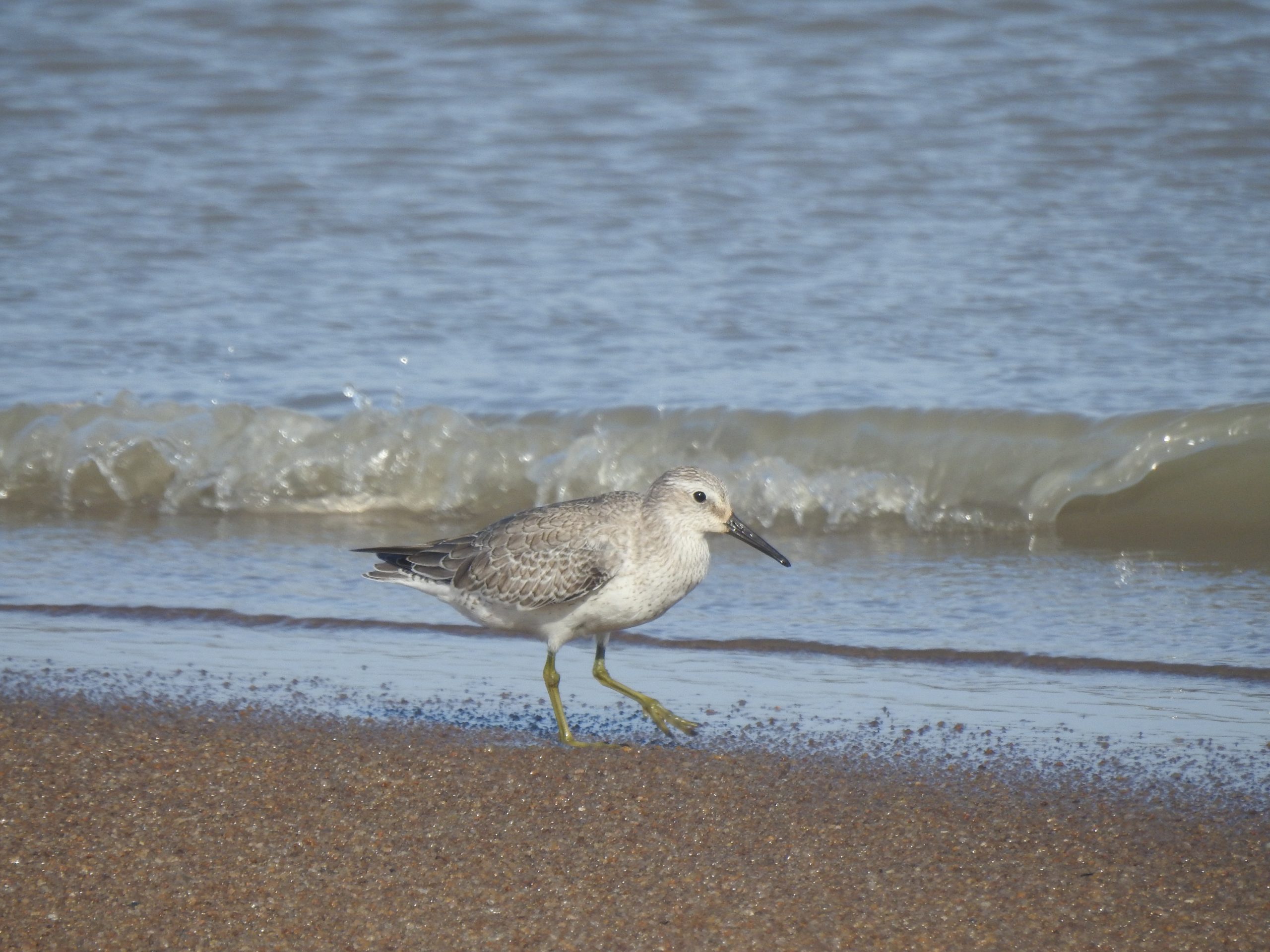
Red Knot on the coast of Suriname. Photo by Arne Lesterhuis
The coastline of Guyana, Suriname and French Guiana is of exceptional conservation value, supporting millions of these species, such as the Red Knot and Semipalmated Sandpiper, which are declining and of global conservation concern. While much of the coastline remains relatively pristine, the region faces mounting threats from unsustainable resource use (including shorebird harvesting), pollution, and offshore oil development.
To address these challenges, Manomet Conservation Sciences led the development of the Guianas Green Coast Conservation Plan through a collaborative and participatory process. The principal purpose of the Plan is to safeguard the ecological integrity of the coastline of the three Guianas by promoting coordinated, cross-border management that balances biodiversity conservation with sustainable livelihoods, protects key habitats and wildlife populations, and ensures the long-term resilience of this shared coastal ecosystem.
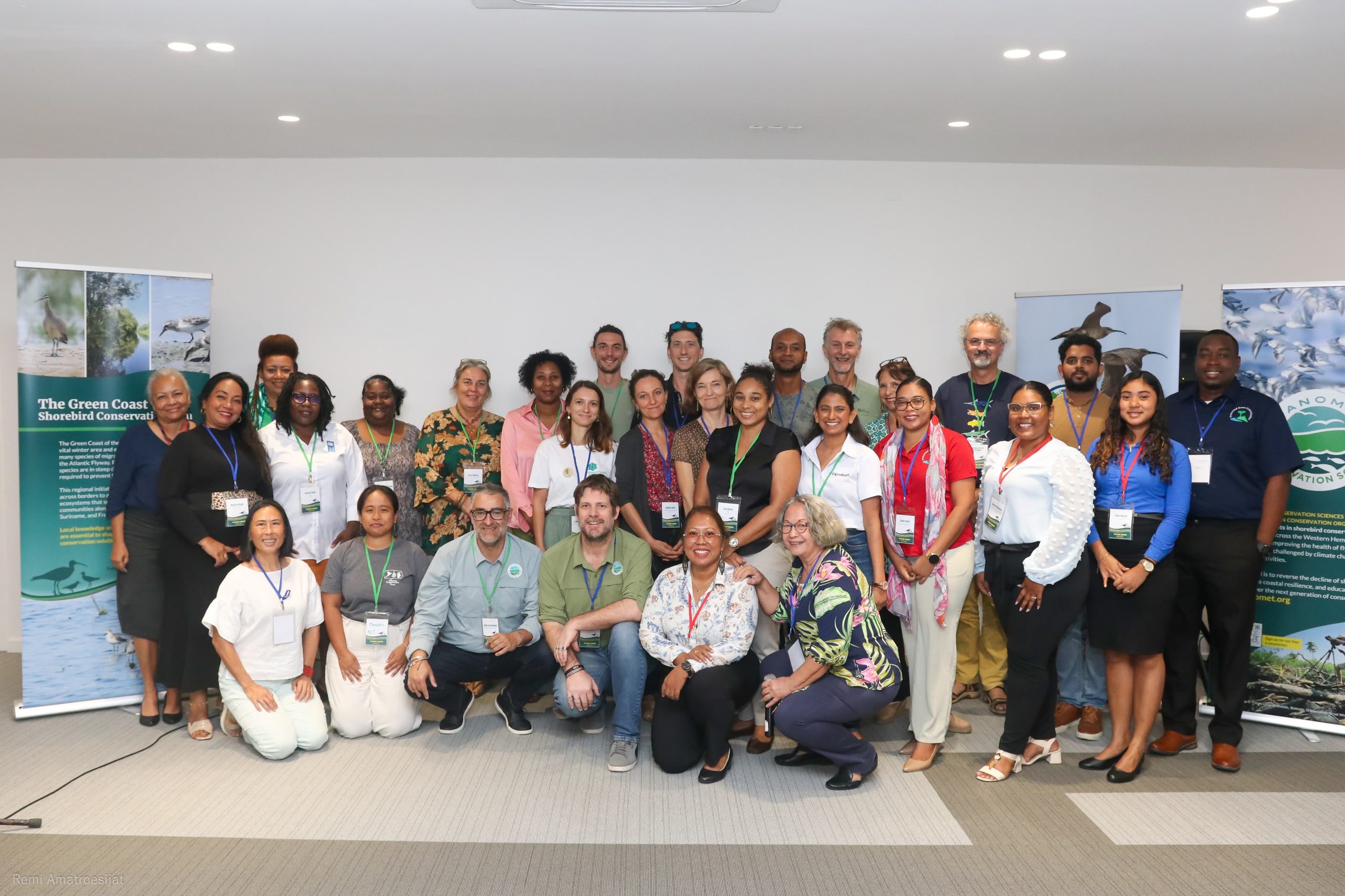
Workshop participants. Photo by Arne Lesterhuis
During 2024-2025, Manomet advanced from local consultations to regional dialogue, combining technical analysis with local knowledge. National and local workshops in each country helped to identify priority threats, define conservation targets, and build conceptual models illustrating the relationships between ecological, social, and economic drivers.
Overall, the process, following the Open Standards for the Practice of Conservation as its guiding framework, was intentionally iterative, combining online working sessions, expert reviews, and validation meetings, to ensure that the Plan reflects a shared vision and regional coherence. It brought together more than 75 stakeholders from Suriname, Guyana, and French Guiana, representatives of governmental organizations, non-governmental conservation groups, resource users (such as fisheries and forestry representatives), academic institutions, and international partners.
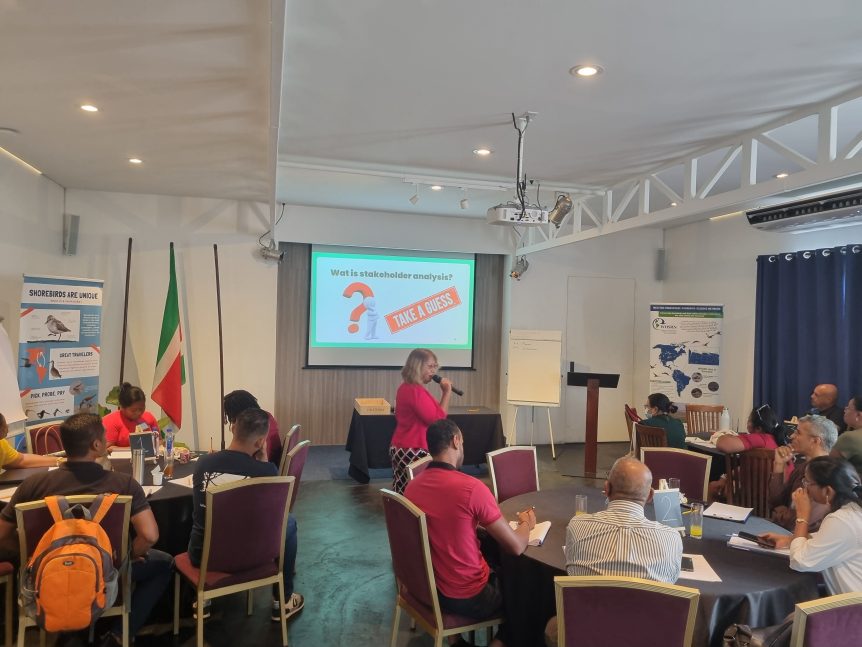
The preliminary findings and strategic assessments were compiled and presented at the first Trinational Workshop held in Paramaribo, Suriname, to establish the foundations for the Guianas Green Coast Conservation Plan. The workshop brought together over 30 participants from more than 15 institutions in Guyana, Suriname, and French Guiana, emphasizing the importance of transboundary collaboration for shorebird conservation and safeguarding ecosystem services supporting the region’s human population.
This collaborative, trinational process directly supports conservation goals along the Atlantic Flyway. By strengthening coordination across the Guianas—one of the most important non-breeding regions for migratory shorebirds—the Guianas Green Coast Conservation Plan contributes to the long-term viability of species that connect coastal ecosystems from South America to North America.
More information on this Trinational Workshop is available on the website of Manomet Conservation Sciences.