
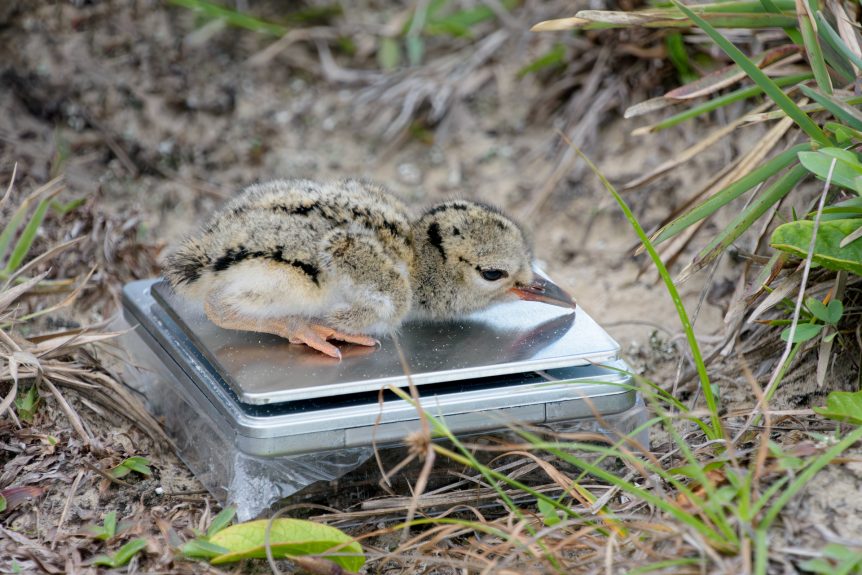
Feature photo: American Oystercatcher chick being weighed to assess its body condition and growth. Photo: Davi Pasqualetti
On the southern coast of São Paulo state, Ilha Comprida remains one of the few places where large expanses of dunes and restinga vegetation (coastal white sand scrub) are still preserved. This mosaic of habitats, increasingly rare, retains ecological characteristics that have disappeared from much of the São Paulo coastline and now survive as remnants of a broader coastal system that no longer exists.
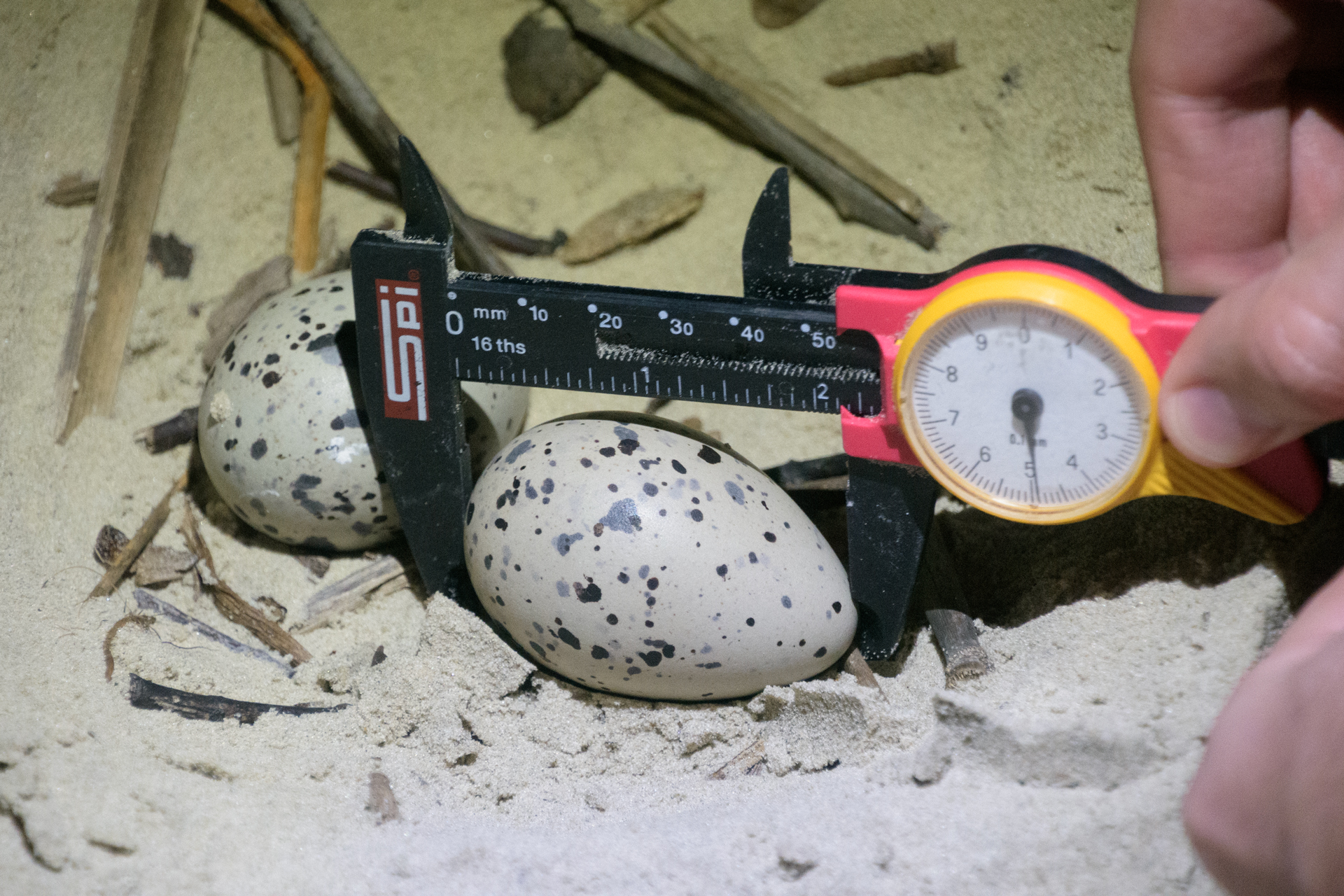
Measurement of American Oystercatcher eggs. Photo: Davi Pasqualetti.
It is in this setting that the American Oystercatcher (Haematopus palliatus) reproduces. Currently, Ilha Comprida holds the largest number of breeding pairs in the state, making it a key site for the species. However, its presence does not mean it is safe. Although it is distributed along much of the Atlantic coast, in the state of São Paulo it is classified as an endangered species.
In response to this scenario, we have developed a continuous monitoring approach along more than 70 km of beach. The work includes the systematic search for and monitoring of nests, which allows us to identify priority breeding areas and assess reproductive success. The banding of individuals is another central tool, generating information on survival, site fidelity, and dispersal patterns, especially in a region where knowledge is still limited. In parallel, we conduct periodic population censuses that allow us to estimate the abundance and distribution of the species along the coastline.
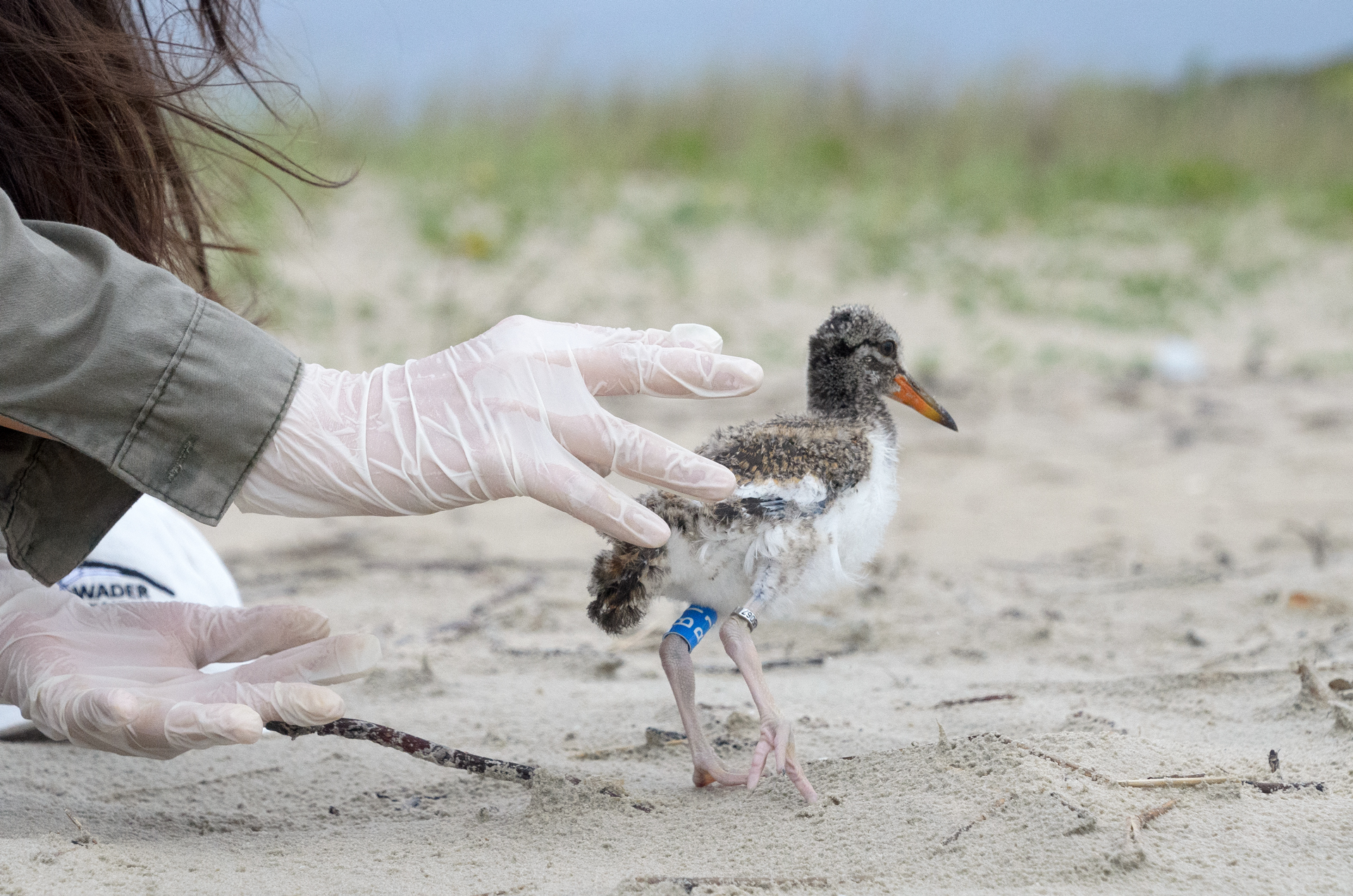
Banding and release of individual “B1”. Photo: Davi Pasqualetti
So far, we have banded more than 20 individuals, several of which have already been reported again thanks to the collaboration of the community and bird observers. A notable case is the individual “C0,” banded as a juvenile in Ilha Comprida in November 2024 and later recorded in March 2026 more than 200 km away, in southern Brazil. This type of record shows that oystercatchers use multiple areas along the coast, reinforcing the need to think about their conservation at a regional scale.
Monitoring also includes recording disturbances through direct observation and camera traps. Among the main threats are the presence of dogs, people walking over the dunes, the accumulation of trash, and, consistently, the circulation of 4×4 vehicles. The latter has been one of the most critical factors, directly associated with the loss of nests during the breeding season. Added to this is plastic pollution. A banded juvenile individual was found dead after being run over, and analysis of its stomach contents revealed the presence of plastic fragments, showing that this problem affects the species from early life stages.
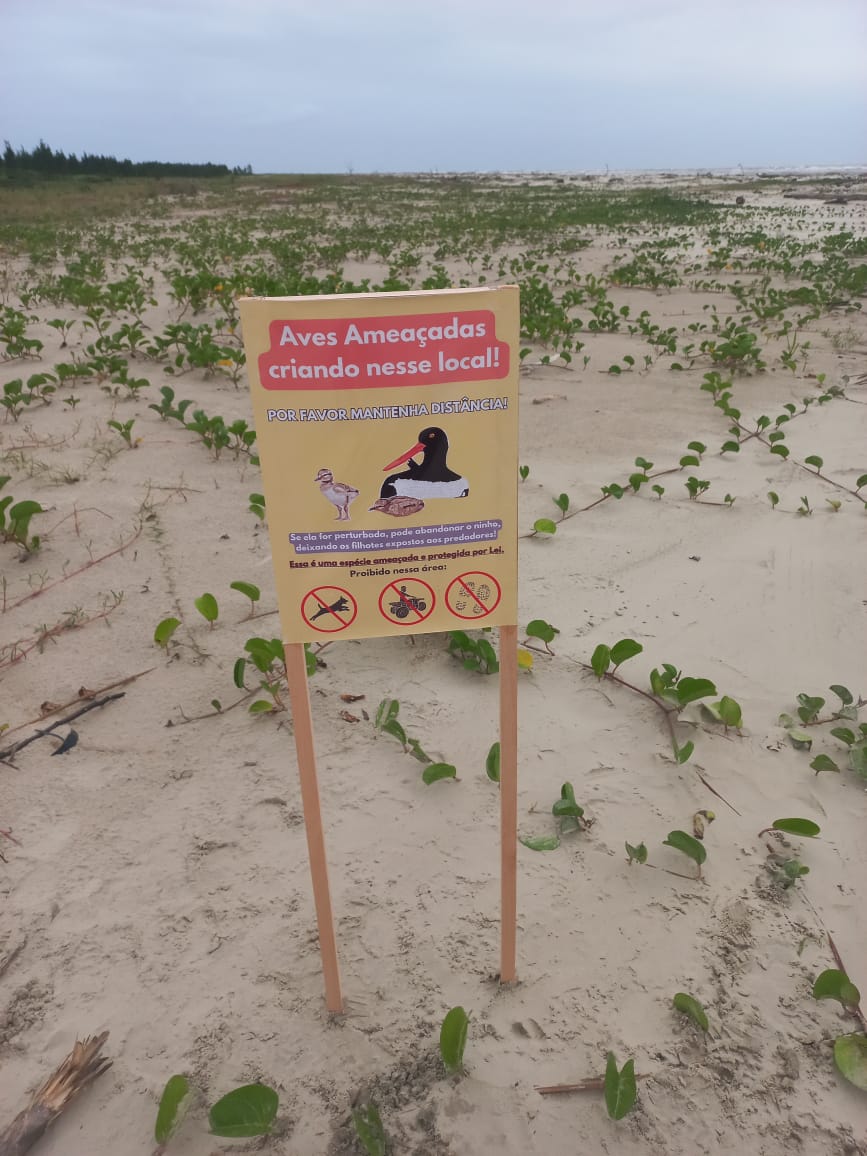
American Oystercatcher breeding area. Photo: Shorebird Project
The project also promotes conservation actions, including the training of volunteers and collaborative work with managers of protected areas and local authorities, which has contributed to the implementation of a municipal law for the protection of shorebirds. It is also funded by the Small Grants for Conservation of Neotropical Shorebirds from Manomet and supported by Wader Quest, which has been essential to sustain field and monitoring activities.
These results reinforce the importance of Ilha Comprida as a breeding site, but also highlight the need to maintain long-term monitoring efforts. In a context of increasing pressure on coastal environments, ensuring the persistence of the species will depend on the continuity of integrated actions in research, conservation, and social participation.
More information contact projetoaveslimicolas@gmail.com or visit the project’s Instagram: @projetoaves_limicolas