
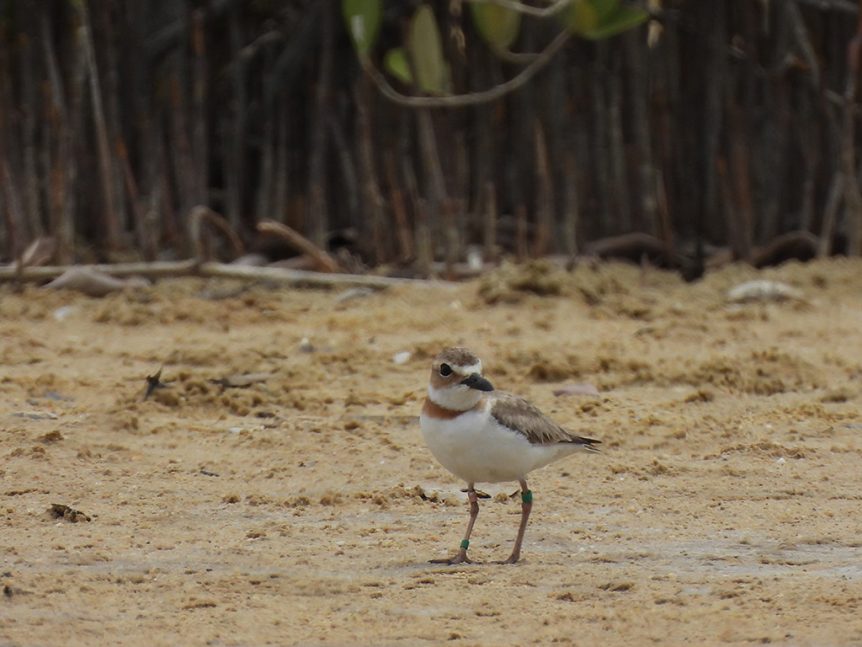
Author: Wilber Bernay – Manomet Small Grants for Conservation of Neotropical Shorebirds
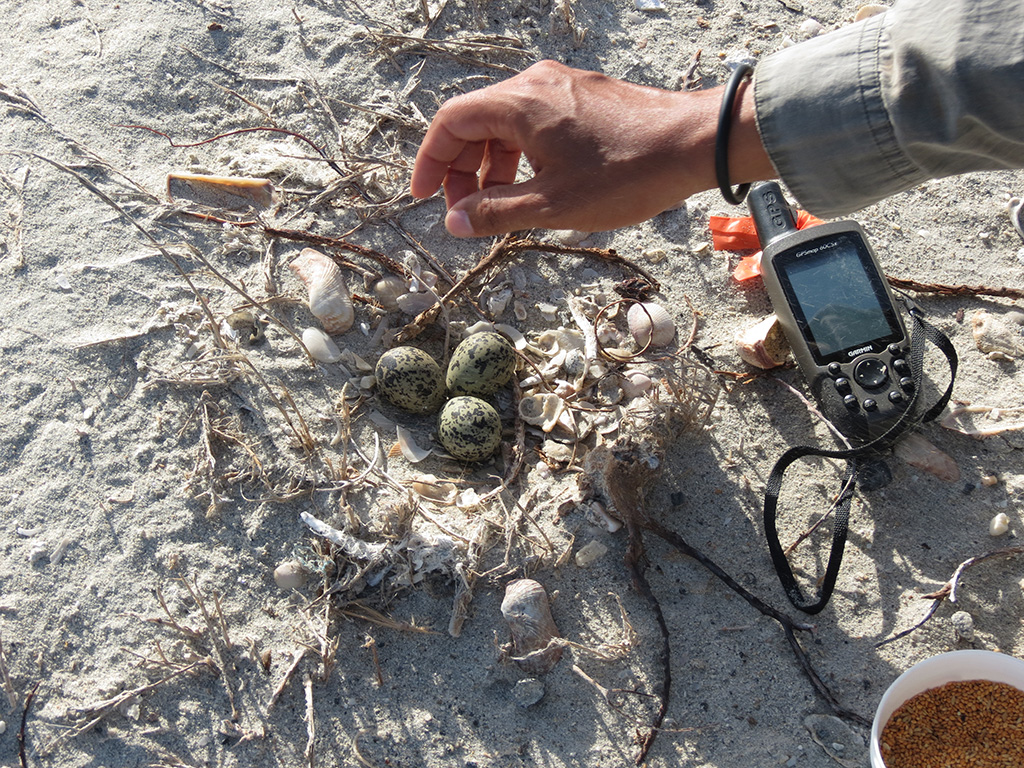
Monitoring Wilson Plover nests. Photo courtesy of Wilber Bernay
Margarita Island, located in northeastern Venezuela, is home to approximately 9,500 hectares of vital ecosystems for shorebirds. However, urban growth and uncontrolled tourism have led to a progressive deterioration of these areas, directly impacting regional biodiversity. A critical case is the Wilson’s Plover (Anarhynchus wilsonia cinnamominus), a local subspecies whose population has declined by 60% in recent decades. This bird faces threats such as vehicle traffic, litter, feral dogs, fishing, and hunting, conditions already reported as detrimental to shorebirds. In response to this crisis, the Wilson’s Plover reproductive monitoring project evaluates how human disturbances impact nesting success. Thanks to the essential support of Manomet Conservations Sciences through the Manomet Small Grants for Conservation of Neotropical Shorebirds, and Wader Quest, we continued this initiative in 2025, successfully reaching our fourth year of study.
During this monitoring campaign, 18 new individuals were banded, including 11 chicks and 7 adults. Regarding the productivity of the 16 monitored nests, success was confirmed in 8 of them; additionally, 3 nests were classified as ‘likely successful’ based on indirect evidence, such as shell fragments and alignment with estimated hatching dates. Considering both figures, the percentage of successful nests was 68%, a notable increase compared to previous years (43% in 2021, 37% in 2022, and 27% in 2023). Despite the high hatching rate recorded, chick survival after leaving the nest remains a critical challenge. Only four pairs successfully moved their young to mangrove feeding areas, where they remained under constant parental supervision. A relevant finding was the observation of agonistic interactions, in which groups of up to 11 adults attacked unrelated chicks; this behavior highlights the complexity of their social structure, and the additional risks chicks face during their early stages of development.
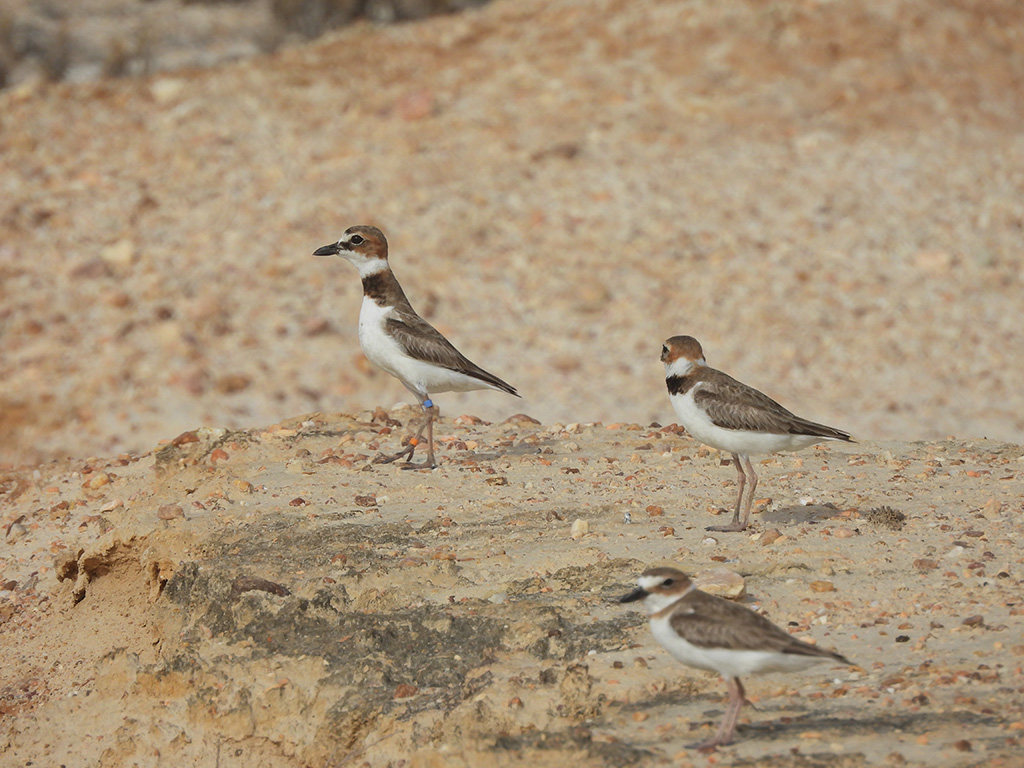
Three Wilson’s Plover seen during the monitoring campaign. Photo courtesy of Wilber Bernay
Finally, a concerning data point is that while most nests were located within protected areas, such as Laguna de la Restinga National Park and the Tetas de María Guevara Natural Monument, 81% showed signs of human disturbance. Footprints were the most frequent threat in the immediate vicinity of the nests, while vehicle traffic predominated in the surrounding areas. These findings underscore that human pressure is constant even in protected zones, making it urgent to design mitigation strategies that allow for a real balance between island development and the preservation of its ecosystems. Continuing monitoring in successive breeding seasons is fundamental to detecting long-term patterns and deepening the analysis of the relationship between habitat characteristics and reproductive success. Furthermore, it is vital to continue strengthening collaboration with local stakeholders to mitigate disturbances in the species’ breeding grounds.
More information on this initiative in Margarita Island, Venezuela: wilberbernay@gmail.com
More information on the Manomet Small Grants for Conservation of Neotropical Shorebirds is available here.