
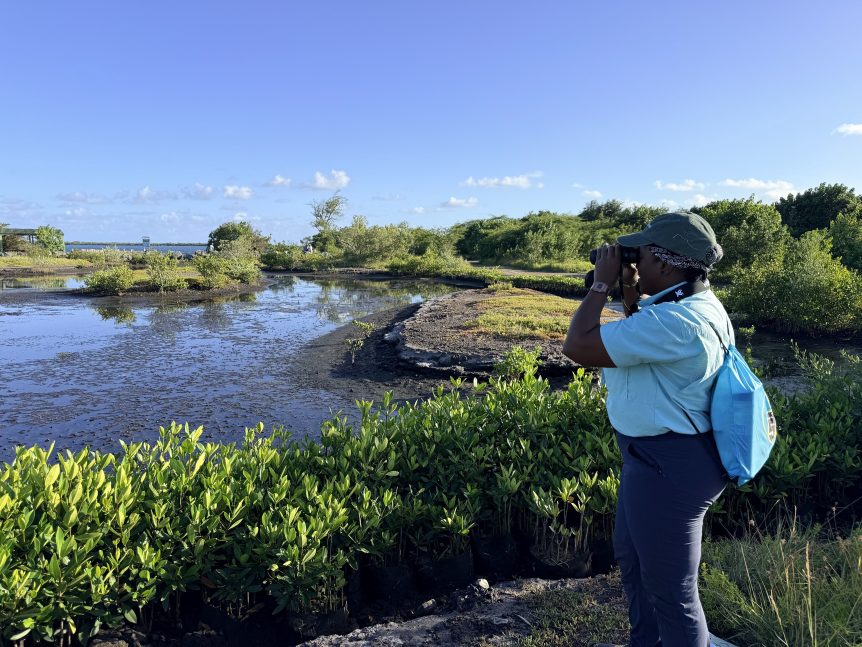
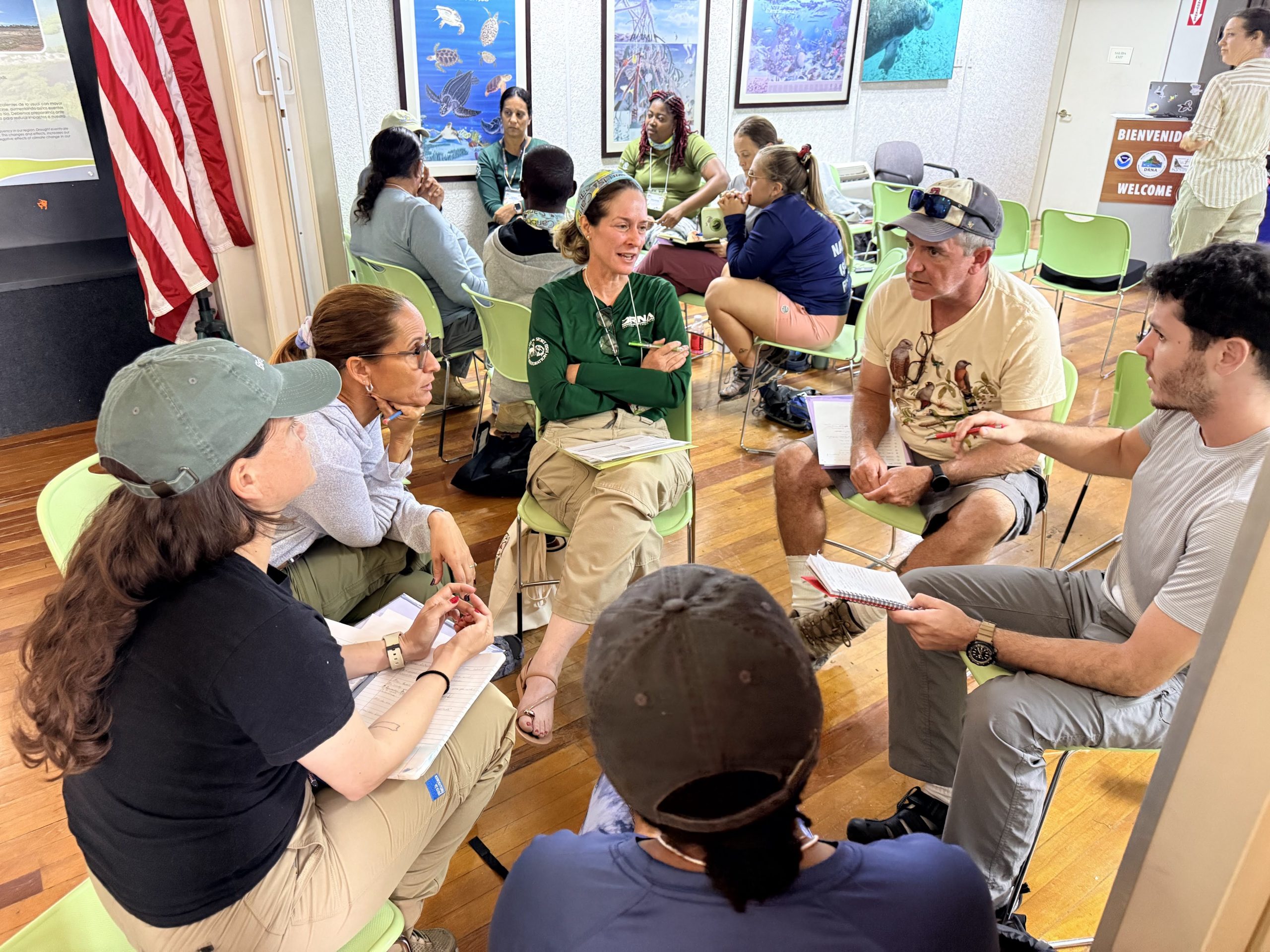
Workshop participants learn about shorebird and waterbird ID, survey methods, data management, and more. Photo by Lisa Sorenson
BirdsCaribbean recently hosted a five-day Waterbird and Shorebird Identification and Census Workshop in Puerto Rico, bringing together 27 conservation practitioners from Puerto Rico and 10 Caribbean island nations. The training was facilitated by experts from BirdsCaribbean, Manomet Conservation Sciences, and the San Juan Bay Estuary Program. Participants strengthened their skills in shorebird and waterbird identification, standardized survey methods, data management, outreach strategies, and approaches for securing funding to support conservation work.
The workshop emphasized the importance of coordinated monitoring across the region. Wetlands throughout the Caribbean provide essential habitat for both resident and migratory birds traveling along the Atlantic Flyway, yet these ecosystems face increasing pressures from coastal development, pollution, land-use change, and climate impacts. Migratory shorebirds in particular have experienced steep population declines in recent decades.
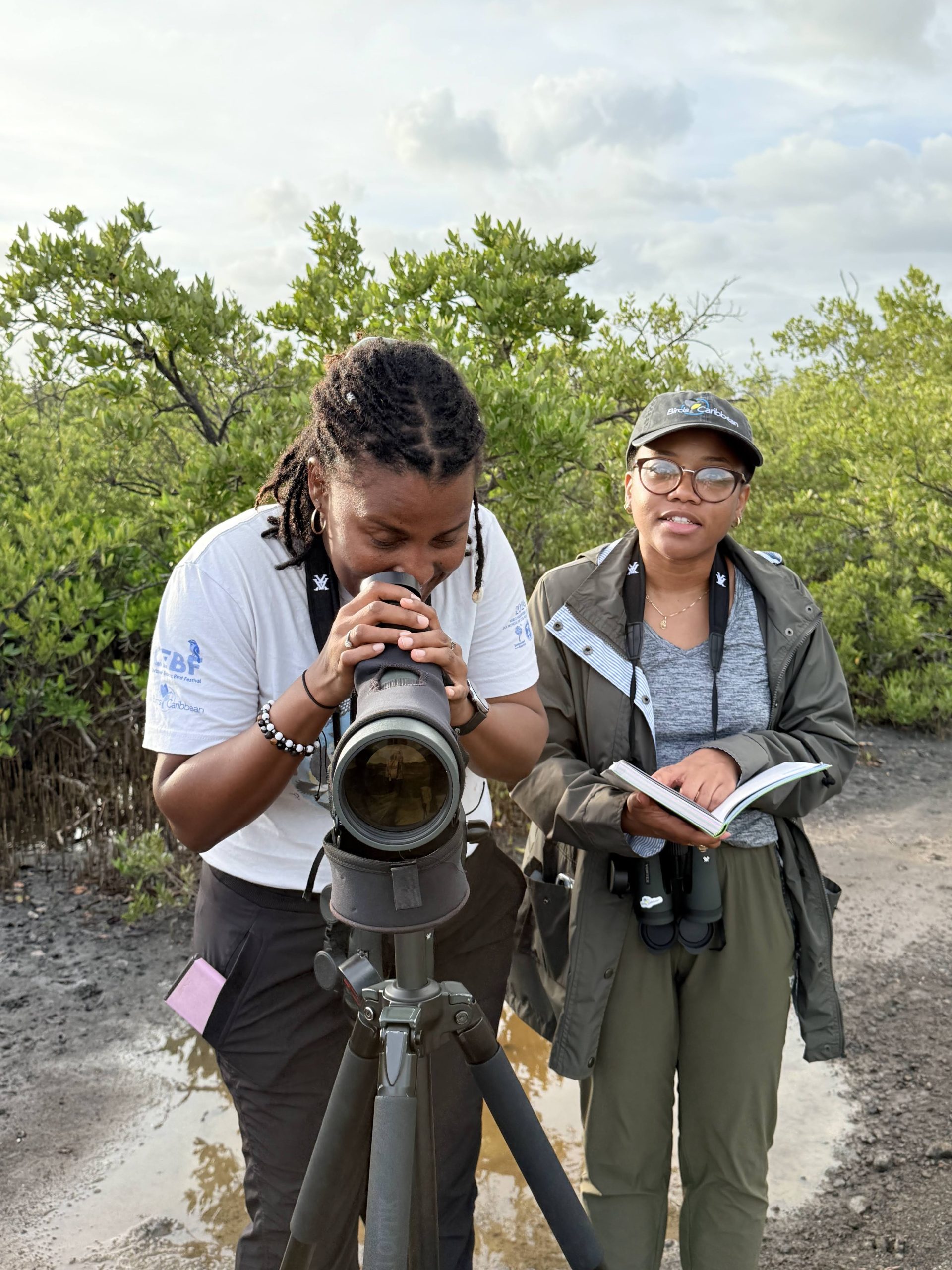
Improving technical skills by working with a spotting scope. Photo by Lisa Sorenson
By building technical capacity and strengthening regional collaboration, the training helps ensure that conservation practitioners can gather reliable data on bird populations and habitats. Understanding where birds occur, how populations are changing, and which sites are most important is critical for guiding conservation actions that protect shorebirds and the wetlands they depend on throughout the Caribbean.
For more information contact Lisa Sorenson.